
Understanding Thoracic Outlet Syndrome (TOS)
While it sounds like a complex medical term, Thoracic Outlet Syndrome (TOS) is actually a very common structural “traffic jam” in the upper body.
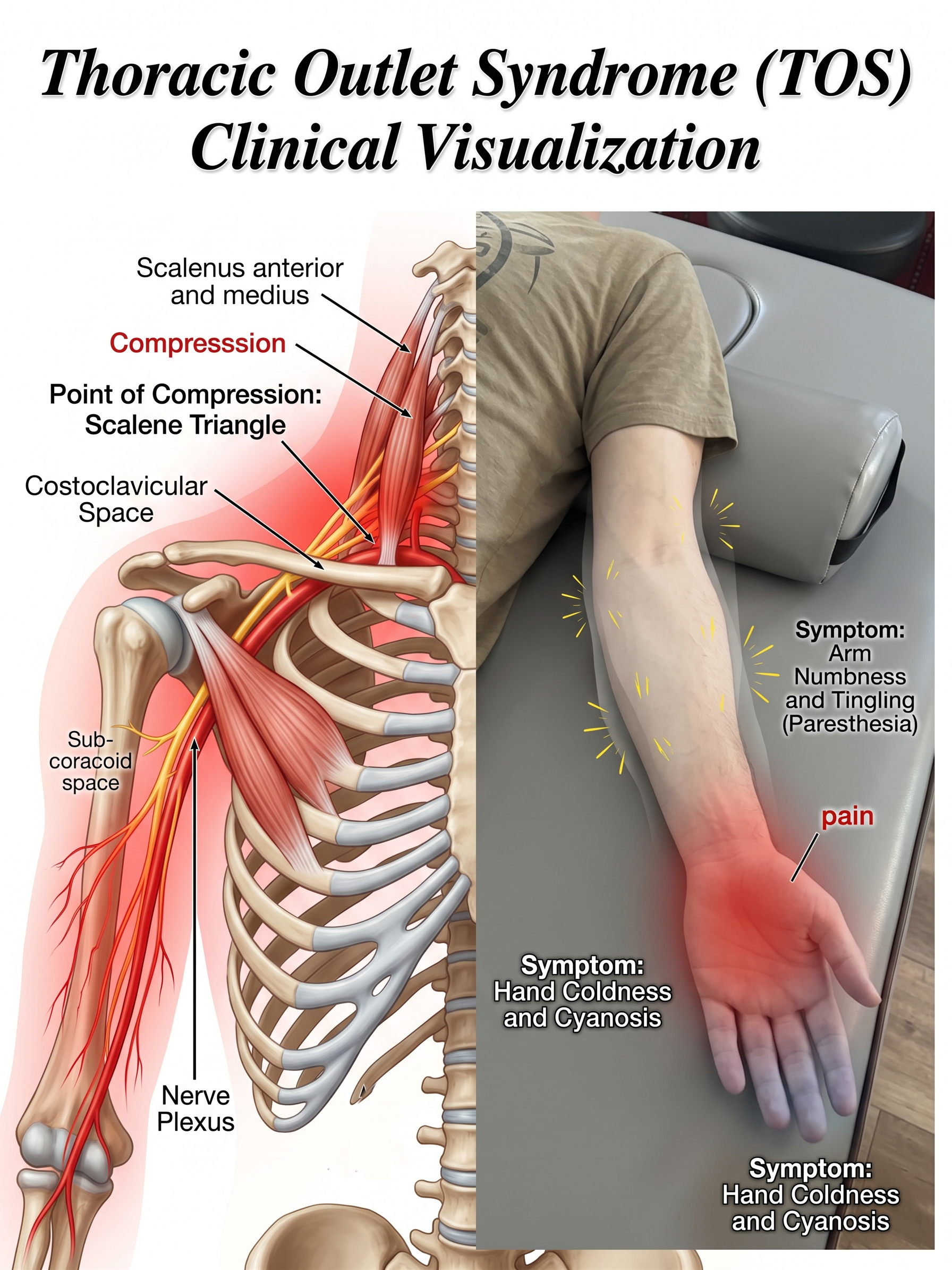
It happens when nerves or blood vessels are compressed in the narrow space between the collarbone (clavicle), the first rib, and the surrounding muscles. This area is called the thoracic outlet. Passing right through this tight corridor is a major highway of nerves (the brachial plexus) and blood vessels that travel all the way down your arm.
When the muscles surrounding this corridor become incredibly tight, short, or inflamed, they squeeze that structural highway. This compression can result in:
- Pain, numbness, or tingling down the neck, shoulders, arms, or fingers.
- A feeling of heaviness, weakness, or fatigue in the arm.
- A deep ache in your neck, shoulders, or upper back.
For most people, Thoracic Outlet Syndrome isn’t caused by a sudden injury—it builds up slowly over time due to everyday habits:
Frequently raising objects above shoulder height strains the shoulder girdle, pinching the thoracic outlet.
Sports and Athletic Activities
- Weightlifting: Heavy lifting, especially overhead presses or excessive muscle building/hypertrophy in the shoulder and neck area, reduces the space in the thoracic outlet.
- Swimming: Repetitive stroke mechanics—especially freestyle, butterfly, and backstroke—involve constant shoulder rotation and overhead arm extension.
- Tennis and Baseball: Serving in tennis or pitching/throwing in baseball puts high stress on the shoulder and arm structures.
- Volleyball and Golf: Repeated swinging, spiking, or overhead hitting motions can irritate the brachial plexus or blood vessels.
Job-Related and Heavy Carrying Tasks
- Painting and Construction: Extended periods of working with arms raised overhead cause muscle fatigue and compression.
- Hairdressing: Holding arms up continuously while styling or cutting hair increases pressure on the nerves and vessels.
- Delivery / Carrying Heavy Shoulder Loads: Repeatedly lifting or hauling heavy items (such as package delivery, stacking boxes, or carrying heavy bags/tools on one shoulder) strains the neck and chest muscles.
- Mechanical Work: Jobs requiring continuous, repetitive arm movements, heavy manual labor, or working in awkward postures.
Contributing Postural Habits
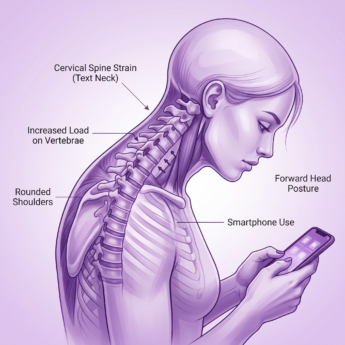
- Poor Posture: Slouching, forward head posture, and rounded shoulders shorten the muscles in the chest (like the pectorals) and compress the space around the collarbone.
- Stress: When we are stressed, we tend to shallow-breathe using our neck muscles, forcing them to overwork and tighten up.
The good news is that targeted massage therapy is an highly effective, non-invasive way to find relief.
How Massage Therapy Helps Create Space
Most cases of TOS are caused by tight muscles pressing against nerves. This means that loosening those specific soft tissues can drastically reduce—or completely eliminate—your symptoms.
During a targeted massage session, the focus is on releasing the specific structural “gateways” where the pinch happens:
- The Neck (Scalene Muscles): These muscles sit on the side of your neck, and are often the primary culprits pinching the brachial plexus.. When they get tight, they clamp down directly on the nerves heading to your arm. Softening these tissues takes the pressure off the nerve network.
- The Chest (Especially Pectoralis Minor): A tight chest pulls your shoulders forward, further pinning down the neurovascular highway. Releasing this muscle allows your shoulders to drop back into an open position.
- The Shoulder Girdle (Focusing on Upper Trapezius & Levator Scapulae): By releasing the chronic holding patterns in your upper back and shoulder blades, it allows your collarbone and ribs to move freely again without rubbing together.
When to Seek Immediate Medical Attention
While the muscle-and-nerve type of TOS responds wonderfully to massage, there is a rarer form involving compressed blood vessels. If your arm or hand suddenly swells, turns pale or blue, or feels distinctly ice-cold to the touch, do not seek a massage—go directly to a medical doctor, as these are signs that your circulation requires urgent medical evaluation.
To Schedule a Massage:
EMAIL: AtlasBodyReset@pm.me
TEXT: (973) 307-0367
Massage Therapy in Northern New Jersey for Thoracic Outlet Syndrome
Drug-Free Holistic Relief for Recovery, Pain, Stress, Depression, Anxiety, Trauma, Insomnia, Nervous System Regulation.
Follow Atlas Body Reset on Instagram
Disclaimer: This information is for educational purposes and is not a substitute for medical advice. Always consult with a healthcare provider for a formal diagnosis.